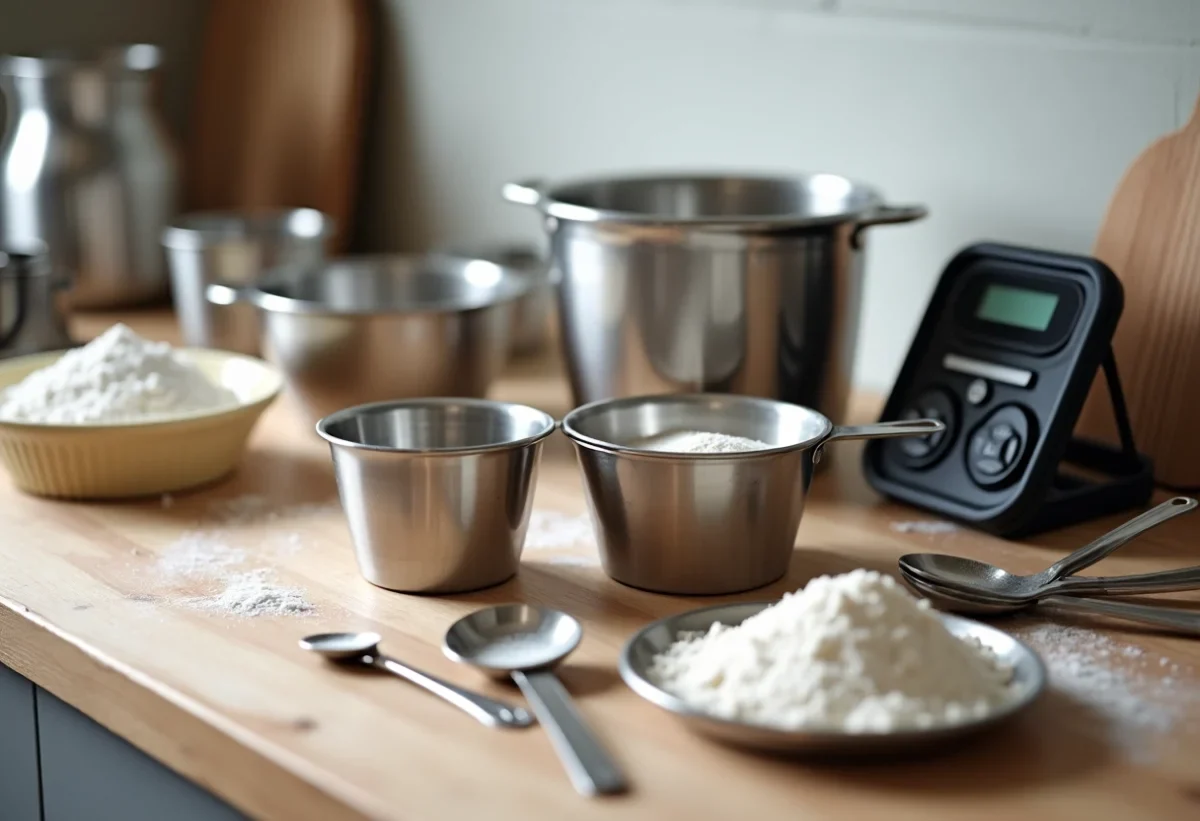
When it comes to preparing a recipe, it’s not uncommon to find oneself faced with volume measurements that differ from what one is used to. Whether it’s an American recipe with cups or a British recipe with fluid ounces, these conversions can quickly become a headache.
For cooking enthusiasts who love to explore recipes from all over the world, mastering the art of converting volumes is essential. Knowing a few simple tips not only saves time but also ensures the accuracy of preparations, guaranteeing delicious and successful dishes every time.
Understanding and mastering measurement units in cooking
Culinary art requires flawless precision. Measurement units are essential to ensure consistency in culinary results. They measure both liquid ingredients like oil, milk, and sauces, as well as dry ingredients such as flour, sugar, and spices.
Metric system and common units
The metric system, widely used in French kitchens, is based on units such as liters, milliliters, and centiliters. For example, to convert 400ml to cl, simply divide by 10, which equals 40cl. Graduated measuring cups allow for precise measurement of these volumes.
- 1 liter = 1000 milliliters (ml)
- 1 milliliter = 0.1 centiliter (cl)
- 1 centiliter = 10 milliliters (ml)
Understanding ingredient density
The density of ingredients plays a fundamental role in volume conversion, especially when it comes to adjusting proportions for a specific number of guests. For example, 100g of flour does not occupy the same volume as 100g of sugar. A kitchen scale then becomes essential for obtaining accurate measurements.
Also consider recipes that use cups as a measurement unit. A cup of flour does not weigh the same as a cup of sugar due to the different densities of the ingredients.
Practical tools and tips
Use tools like conversion tables and measuring cups to make volume conversion easier. These tools ensure not only accuracy but also simplicity in culinary preparations, thus ensuring consistency in results. For professionals in the food industry, this rigor is essential for every dish. 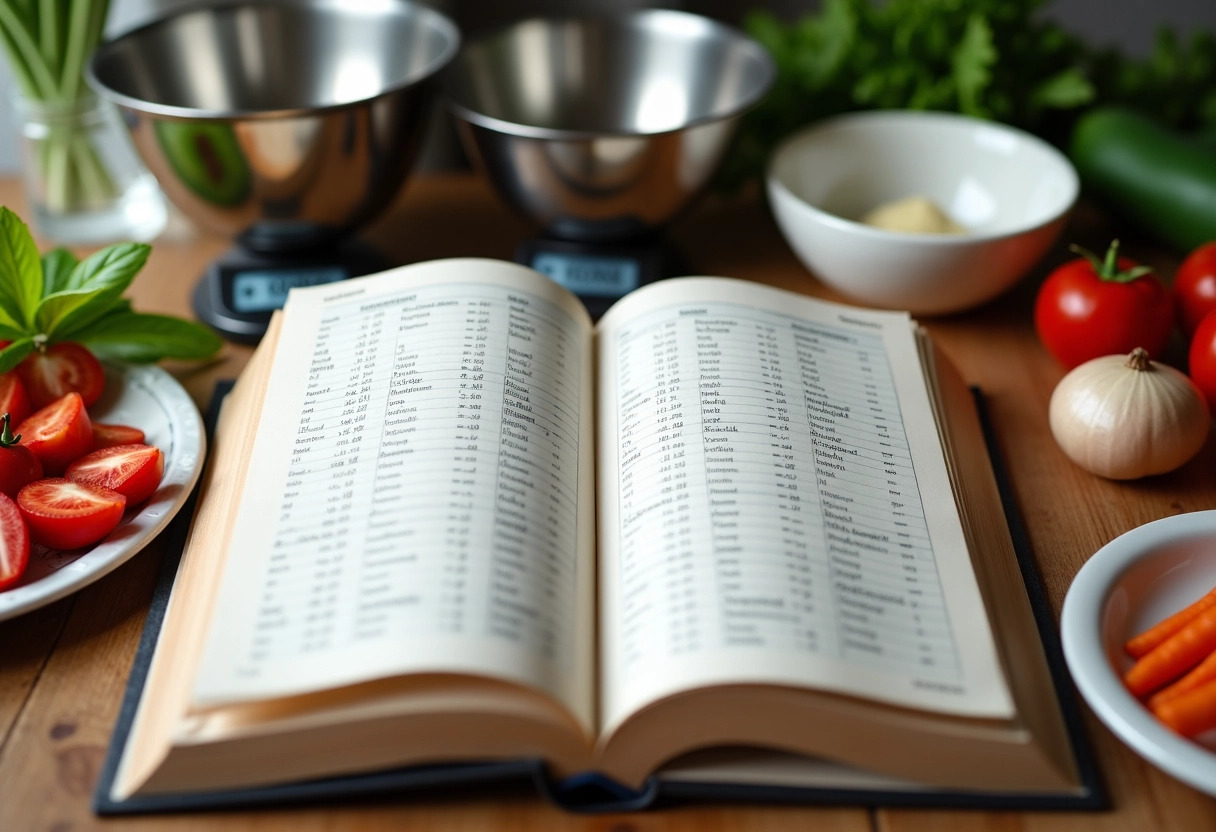
Techniques and tips for precise and effective conversions
The use of conversion tables and specific utensils is essential for successful volume conversions in cooking. These tools help avoid common mistakes and ensure the accuracy of measurements, which is crucial for consistent culinary results.
Using appropriate measuring tools
Measuring cups, often made of glass or clear plastic, are graduated in milliliters and centiliters, making conversions easier. Electronic kitchen scales allow for very precise weighing, especially for dry ingredients like flour or sugar, whose density can vary.
- Graduated measuring cups in milliliters and centiliters
- Accurate electronic kitchen scales
- Measuring spoons for small quantities
Referring to conversion charts
Conversion charts are valuable allies. They indicate the equivalences between different measurement units, for example, how many grams are equivalent to a cup or how many milliliters are in a tablespoon.
| Unit | Equivalence |
|---|---|
| 1 cup | 240 ml |
| 1 tablespoon | 15 ml |
| 1 teaspoon | 5 ml |
Trusting experience and intuition
Experience and intuition also play a fundamental role in volume conversion. Experienced chefs develop a particular sensitivity to measurements and proportions, allowing them to adjust recipes with great precision, even without sophisticated measuring tools.
Thus, converting volumes in cooking relies on a combination of precise tools, reliable references, and a certain degree of intuition. For professionals in the food industry, this rigor is essential for every dish.