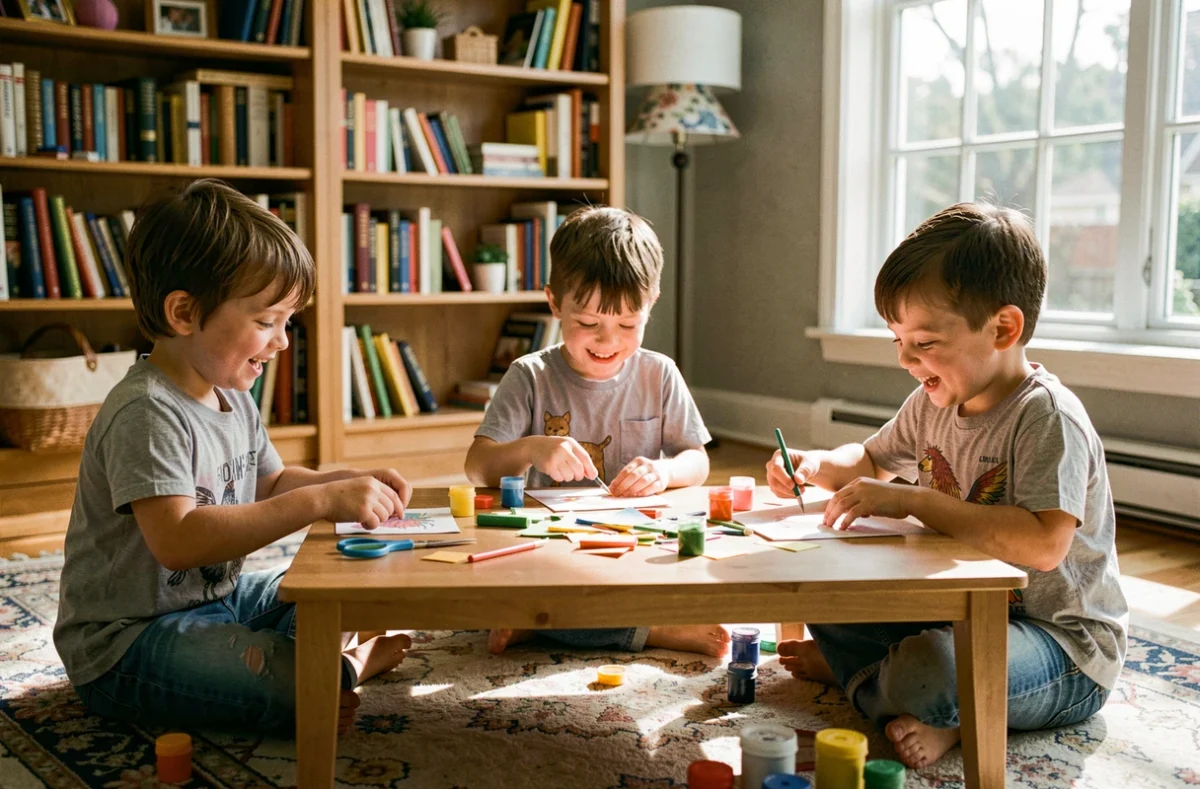
Keeping a child occupied without screens, using what’s lying around in a cupboard, while being alone and already tired: this is the real daily challenge. Lists of fifty creative activities circulate everywhere, but they often assume specific materials, preparation time, and an adult available from start to finish. The topic deserves a different perspective, focused on the actual feasibility for a parent juggling meals, laundry, and homework.
Children’s activities in under ten minutes: the game-changing criterion
Most proposals for fun activities for children fail on one specific point: setup time. A painting workshop with table protection, preparing pots, and final cleanup easily requires thirty minutes of adult supervision for just fifteen minutes of actual play.
The relevant ratio is the opposite. A viable activity starts in under two minutes and keeps the child occupied for at least ten. This filter eliminates many classic proposals, but it corresponds to the reality of a solo parent preparing dinner or making a phone call.
Some ideas that pass this filter: a bin of rice or dry pasta with cups and a spoon (suitable from two years old), a roll of kraft paper laid out on the floor with three markers, or a sorting game with mismatched socks. The materials are already in the house, and the child explores independently.
Resources like le-petit-castor.fr offer materials designed for this type of independent play with little preparation.
Games without materials at home: three formats that work
When the cupboard is empty or motivation is lacking, games without any materials remain an underestimated option. Their usual limitation is that they require the active presence of an adult. Some formats escape this constraint.
The floor course
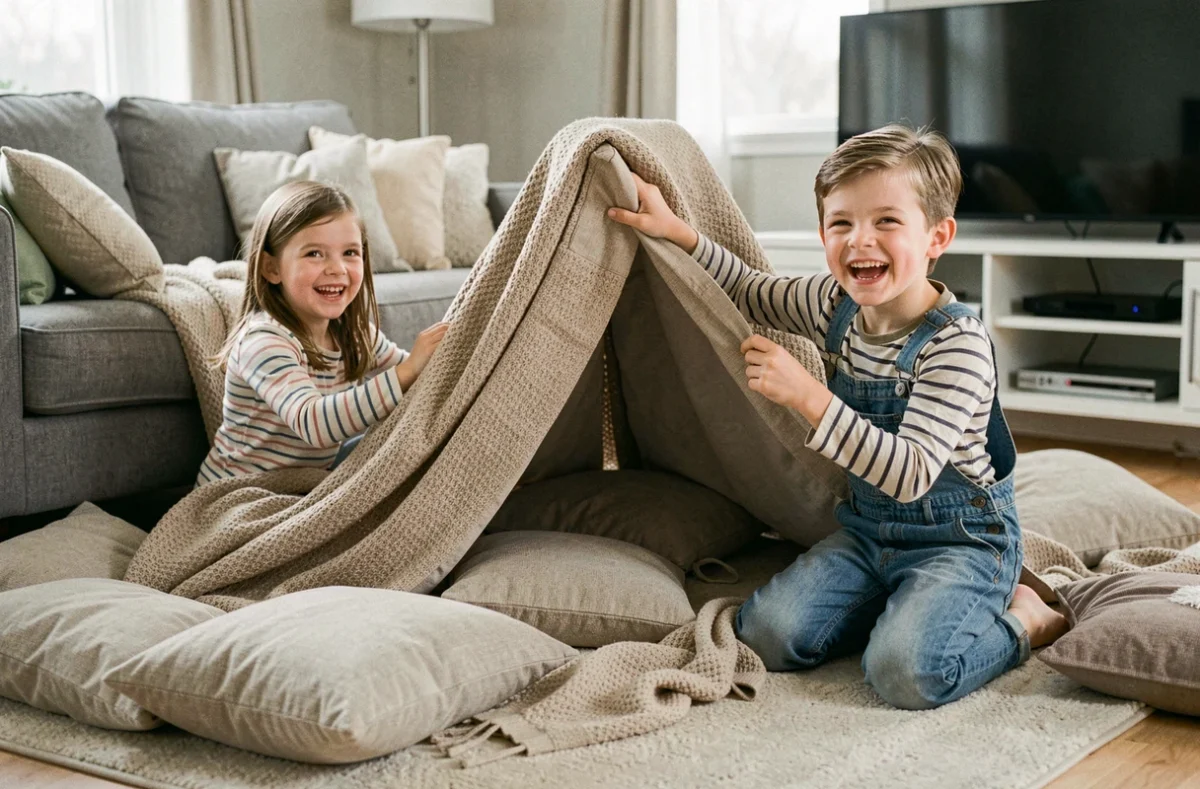
Arranging cushions, towels, and chairs to create a course in the hallway or living room takes just a few minutes. Once set up, the child spontaneously repeats it for often much longer than the setup time.
This type of play also meets a physiological need: the WHO recommends that children aged five to seventeen engage in at least sixty minutes of moderate to vigorous physical activity each day. An indoor course alone isn’t enough, but it helps reach this threshold on rainy days.
The narrative game with instructions
Giving three objects to a child (a wooden spoon, a dish towel, a box) and asking them to invent a story stimulates imagination without constant supervision. From four or five years old, this format works with partial independence. The adult initiates the game and then steps away.
The disguised household mission
Sorting cutlery, organizing cans by size, counting apples: turning a household chore into a playful challenge occupies the child and advances daily tasks. This trick works especially well between the ages of three and six, when the child perceives the mission as a game and not yet as a chore.
Creative activities for children with paper and water
Two nearly universal resources in a household, paper and water, are enough to cover a wide variety of activities. Paper (newspapers, scrap paper, packaging cardboard) can be folded, torn, and glued. Water can be poured, transferred, and colored with a bit of syrup.
- Free or guided folding: even without knowing origami, a child who folds and unfolds paper explores geometry and fine motor skills for long minutes.
- Water painting on cardboard: a brush (or a finger) dipped in water leaves a dark mark on dry cardboard. The child draws, the drawing dries and disappears, then they start again. No cleanup required.
- Transferring: two bowls, a measuring cup, and water. For younger ones, add a sponge to wring out. Transferring is one of the most documented independent activities in Montessori pedagogy, and it costs nothing.
- Express paper mache: torn newspaper, a bit of water, and flour create a moldable paste. Preparation takes a few minutes, but the play can last much longer.
Screens and concrete alternatives: what recent data says
The issue of screens is no longer just an individual parenting topic. Since the decree of June 27, 2025, nurseries and childcare facilities must no longer expose children under three years old to screens. This regulatory ban marks a turning point from the simple recommendations that prevailed before.
The most challenging moments to replace are those where the screen served as a transition: waiting at the doctor’s office, car rides, meal preparation. For each of these slots, a realistic alternative exists, but it requires prior planning.
- While waiting: a small notebook and a pencil in the bag, or a game of oral riddles (animals, colors, sounds).
- During travel: nursery rhymes or audio stories on a portable speaker. The child listens without staring at a screen.
- During meal preparation: setting the child at the kitchen table with a sorting or modeling activity (salt dough, play dough) allows for visual contact without interrupting the ongoing task.
Public health France emphasizes a collective approach that no longer relies solely on parental responsibility. The Bordeaux program “Growing up well with screens” combines regulation, media education, and the development of local cultural and sports activities. Field feedback varies on the long-term effectiveness of these initiatives, but they have the merit of shifting the mental load away from just the household.
Nature and outdoor games for children: the garden or the sidewalk is enough
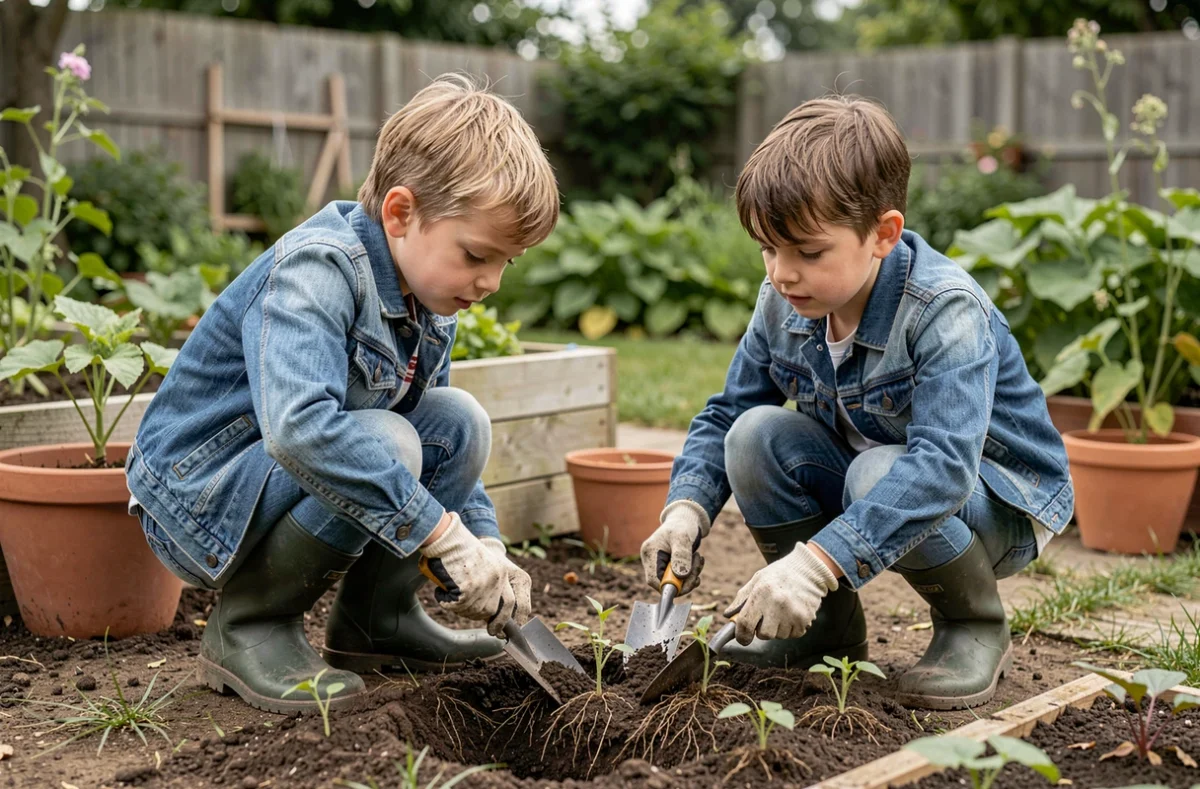
Outdoor activities appear on all lists, but they often assume a car trip to a forest or park. For a solo parent with a young child, the garden, balcony, or even the sidewalk in front of the house provides sufficient play space.
Collecting pebbles, observing ants, watering a plant: these micro-activities outdoors combine sensory stimulation and movement without logistics. They start by opening the door and end by closing it. A bucket, a magnifying glass, or a watering can can turn a quarter of an hour outside into an exploration.
The goal is not to replace a trip to the forest or a visit to the zoo. It’s to fill short slots, between snack time and bath time, where the child needs to move and the parent needs to catch their breath. The best game for a child is one that a tired adult can initiate effortlessly, not one that tops a Pinterest list.