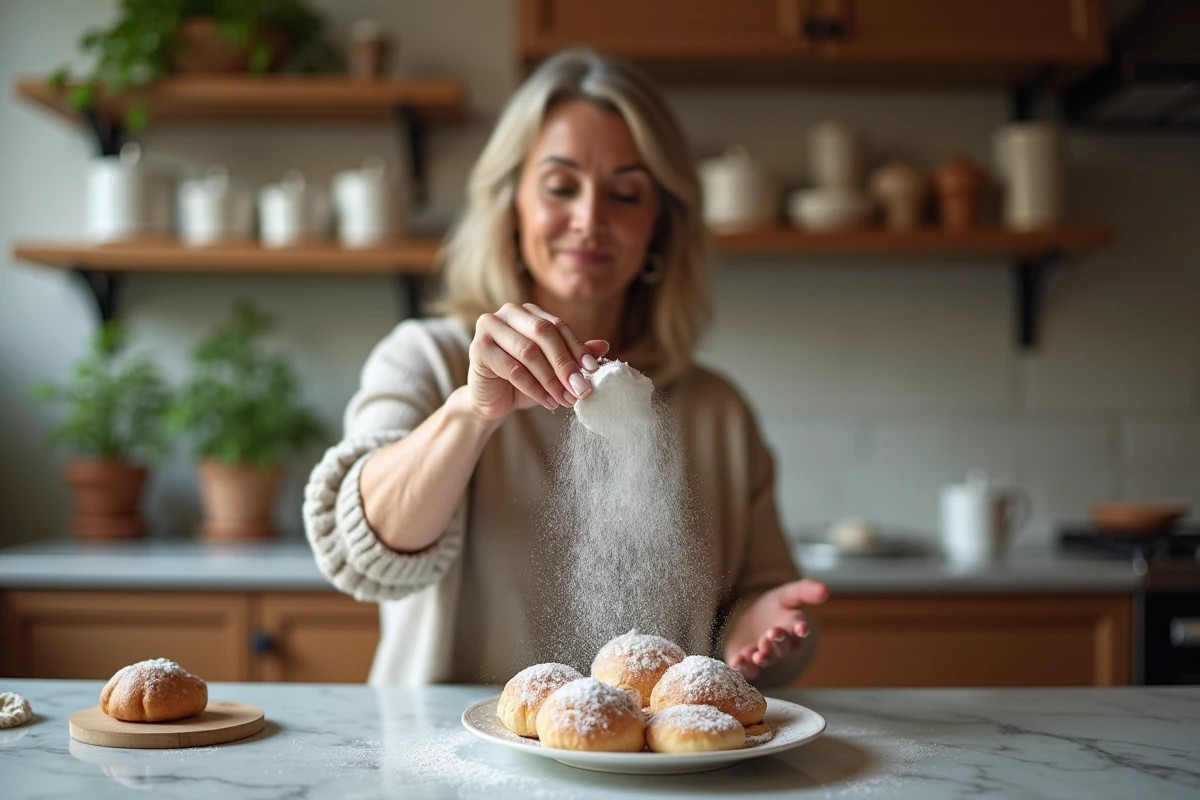
Powdered sugar evaporates before your eyes in just a few minutes on a dessert barely out of the oven. Sometimes, even when the cake is completely cool, the white powder transforms into a translucent crust at the slightest touch of humid air in the kitchen or in the presence of fresh fruit. Classic gestures, like dusting from above, systematically fail against these capricious conditions.
However, there are simple ways to outsmart these recurring traps. Certain ingredients, often adopted by professionals, extend the hold of powdered sugar and ensure a clean presentation. Other solutions rely on managing temperature, choosing the right surface, or pairing with specific preparations.
Why powdered sugar doesn’t always hold on desserts: understanding the causes to act better
Powdered sugar, this fine white powder that beautifies our desserts, faces tough opponents. Humidity in the air remains the primary challenge. As soon as a film of water settles on a cake, the sugar melts or forms a dull veil, losing all its visual appeal. If the biscuit is still warm, it gets even worse: condensation forms, and any attempt at dusting falls short.
On homemade cakes, the presence of fresh fruit or creams worsens the situation. These toppings release water, which is instantly absorbed by the powdered sugar. For tarts, the smooth or wet surface allows the powder to slide off without giving it time to adhere. Even more porous textures like sponge cake or pound cake cannot withstand it if the dessert is not perfectly cooled.
Another factor: the texture of the powdered sugar itself. A very fine powder absorbs moisture quickly, while a slightly thicker powdered sugar offers better hold on dry surfaces.
Timing makes all the difference: it’s better to wait until the cake is completely cool and the air is dry before dusting. To delve deeper into these mechanisms and discover how to make powdered sugar hold, the site “Effective Techniques for Fixing Powdered Sugar on Your Pastries – Gastronomie du Jour” details practical tips for achieving a successful presentation, even on the most delicate homemade recipes.
How to achieve a perfect glaze? Tips and techniques for lasting powdered sugar application
For a powdered sugar glaze that lasts, several parameters need to be monitored: temperature, texture, dusting technique. Always start by letting the top of the cake cool on a rack. The surface must be completely dry, neither greasy nor damp. This detail, often overlooked, makes a difference when it comes to glazing a cake accurately.
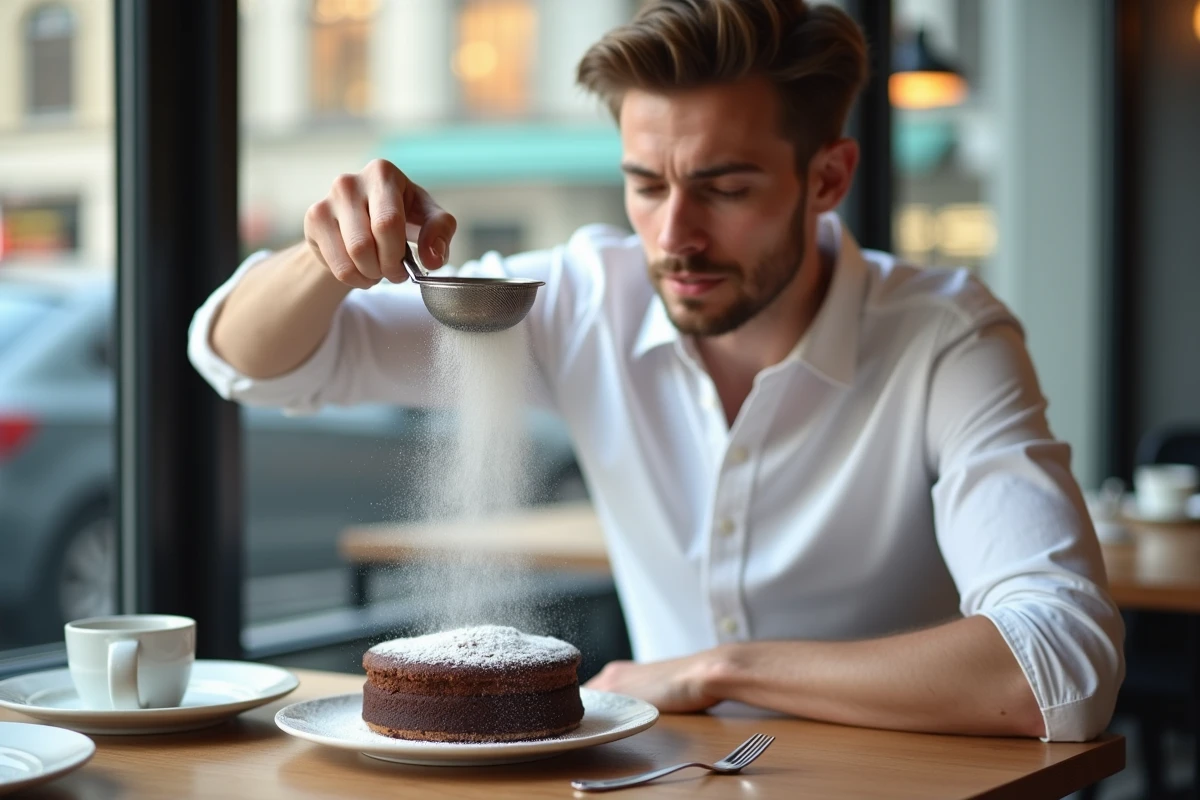
A quality sifted powdered sugar, passed through a fine sieve, allows for an even and light distribution. Forget the spoon; use a small fine strainer instead: the veil will be consistent, without lumps, for a glaze that is clean and elegant.
Three practical tips to make powdered sugar stick to your desserts and pastries
Here are some concrete strategies used in pastry making to prevent powdered sugar from disappearing in plain sight:
- Spread a thin layer of jam or neutral jelly on the cake or pastry before dusting: the powder sticks better and doesn’t melt as quickly.
- To glaze desserts with an irregular surface, use a stencil and gently apply the powdered sugar: you’ll achieve sharp patterns while limiting direct contact with moisture.
- In humid air, place the dessert in the fridge for a few minutes after dusting: the cold sets the powdered sugar for cake without dissolving it.
Another tip: a piping bag allows for precise decoration. Mix a little powdered sugar with a few drops of water to obtain a soft paste, then draw lines or patterns around the edges of the dessert.
Glazing, far from being a simple gesture, requires method and attention. The combination of careful technique and good knowledge of materials transforms an ordinary dusting into a real asset to enhance the appearance and taste of homemade pastries.
Fondant, glaze, and other alternatives: exploring new ways to elevate your creations
Fondant has become popular among both amateurs and professionals for transforming any pastry into a centerpiece. Easy to mold, it takes on any shape and can be colored according to desire. It hides the flaws of a biscuit or a cake before welcoming decorations, patterns, or inscriptions. To personalize homemade desserts, fondant remains a reliable and elegant option, far from simple dusting.
The mirror glaze shakes up the habits. This precise mixture, often based on dark chocolate, liquid cream, and sometimes a gelling agent, covers the dessert with a smooth and shiny film. But be careful: the temperature must be exact! Too hot, it drips; too cold, it sets without shining. This chocolate glaze adapts to all desires: white, dark, praline, each offering a different experience.
Other alternatives also have their followers: whipped ganache, light buttercream, fruity glaze. Each finishing touch tells a different story and offers contrasting sensations, between sweetness, tartness, or a bitter touch. The piping bag allows for meticulous finishes: raised decorations, layers, everything becomes possible to let creativity speak.
To personalize your homemade desserts as desired, combine textures: the shine of mirror glaze, the flexibility of fondant, the density of ganache. Let each gesture convey an intention, each finish become the signature of your dessert, a tribute to artisanal precision and the art of detail.
The next time you take a cake out of the oven, imagine it dressed in a veil that doesn’t run at the first humid breeze. That’s the true secret of a dessert that leaves a mark on the mind and the eyes.