Estimating the amount of wine and champagne for a large event relies on a breakdown by service sequence, not on an overall headcount ratio. Applying a single average leads to overstocking champagne at the expense of meal wine, or vice versa.
Glasses per sequence: the technical calculation basis
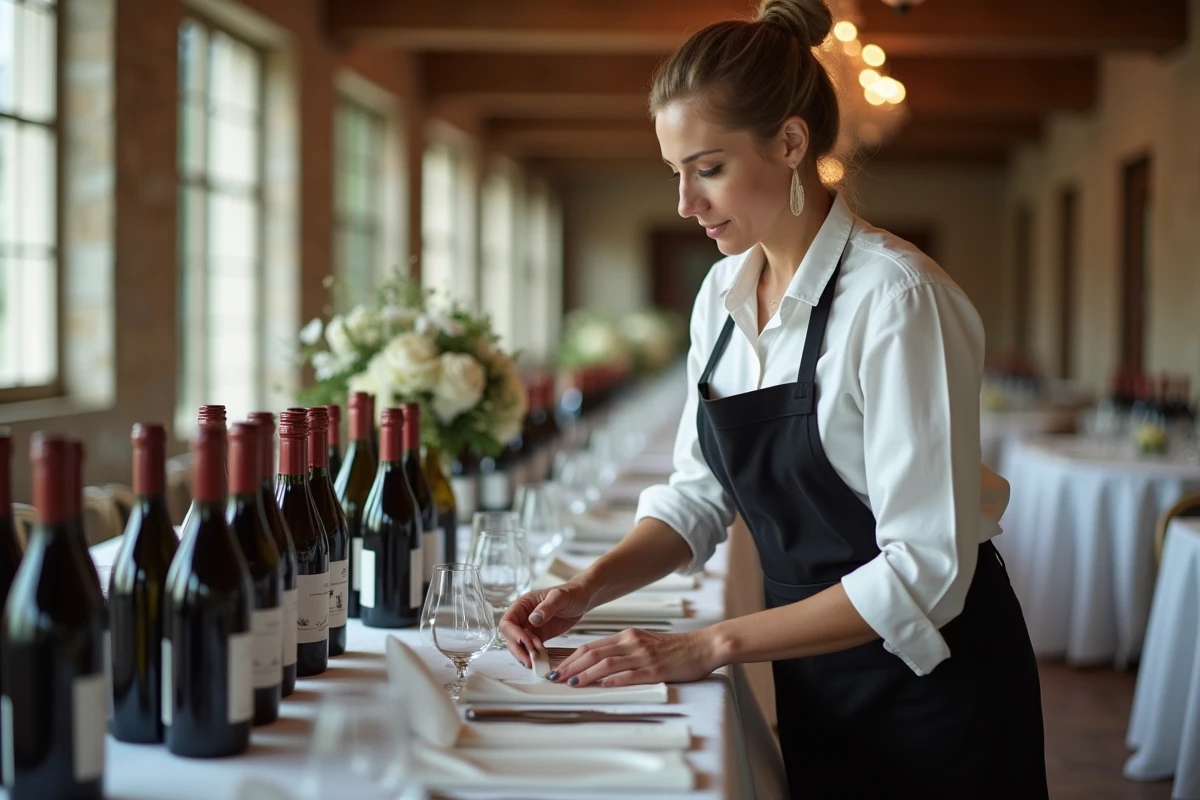
The most reliable method segments the reception into three to four distinct phases: welcome drink (or cocktail), meal (starter, main course), cheese-dessert, and possibly a dancing evening. Each sequence calls for a different type of drink and volume of consumption.
For the welcome drink, we recommend planning for two to three glasses of champagne or sparkling wine per guest. This moment rarely lasts more than an hour, but consumption is concentrated. The welcome drink alone absorbs the majority of the champagne planned for the event.
During the meal, the focus shifts to still wine. Counting half a bottle per guest covers the starter and main course. The red/white distribution depends on the menu served, but a ratio of two-thirds red to one-third white remains a reasonable starting point for a classic wedding meal.
Dessert and cheese reintroduce champagne or a sweet wine. Planning for one glass per person is sufficient in most cases, as the appetite for drinks diminishes at the end of the meal. To accurately assess the amount of wine and champagne for 100 people, these volumes must be added up sequence by sequence.
Calculating champagne bottles for 100 guests
A standard bottle of champagne fills six glasses. If three glasses per guest are planned for the welcome drink and one glass for dessert, that represents four glasses per person for the entire reception.
For 100 guests, the calculation yields about 400 glasses, or just under 70 bottles of champagne. We systematically add a safety margin, bringing the order to around 75 bottles. Switching to magnum size reduces the number of handling and facilitates service at the welcome drink, where the pace of opening is intense.
This estimate assumes that champagne is the only drink served at the cocktail. If you also offer non-alcoholic cocktails, beers, or sparkling wines like crémant, the volume of champagne may decrease by a good quarter.
Volume of red and white wine for a wedding meal
For a seated meal of 100 people, the basis of half a bottle per guest gives 50 bottles of wine. Distributed according to a common meat-fish menu:
- 30 to 35 bottles of red to accompany the meat main course and cheese, favoring soft appellations that appeal to the majority
- 15 to 20 bottles of dry white for the starter and any fish, adjusting if the menu includes two dishes in white sauce
- Plan for five additional bottles of rosé if the reception takes place in summer, as the spontaneous demand for rosé significantly increases in warm weather
The composition of the menu dictates the red/white distribution, not the other way around. A 100% fish meal completely reverses the proportions.
Adjusting according to guest profile
A younger audience (25-35 years) tends to consume less wine at the table but more at the cocktail. Conversely, older guests prefer wine during the meal. We also observe that the presence of children and teenagers, often counted among the 100 guests, skews the calculation if they are not excluded from the adult ratio.
Subtracting non-drinkers and minors from the total is the first step. Out of 100 guests, the number of actual drinkers often hovers around 75 to 85 people.
Managing stock without waste or shortages
The current trend pushes for tighter estimates to limit over-purchasing. Several caterers and online calculators now segment volumes by consumption moment, specifically to avoid bulk ordering.
Ordering by sequence allows for reducing surpluses by about a quarter compared to a flat-rate calculation. The logic is simple: adjust each type of drink to the corresponding service time rather than dividing a total volume by the number of heads.
Some concrete levers to refine the order:
- Negotiate a clause for the return of unopened bottles with the wine merchant or estate, which neutralizes the financial risk of surplus
- Plan for champagne in magnums for the welcome drink (one magnum replaces two bottles with less breakage and faster service) and keep standard bottles for dessert
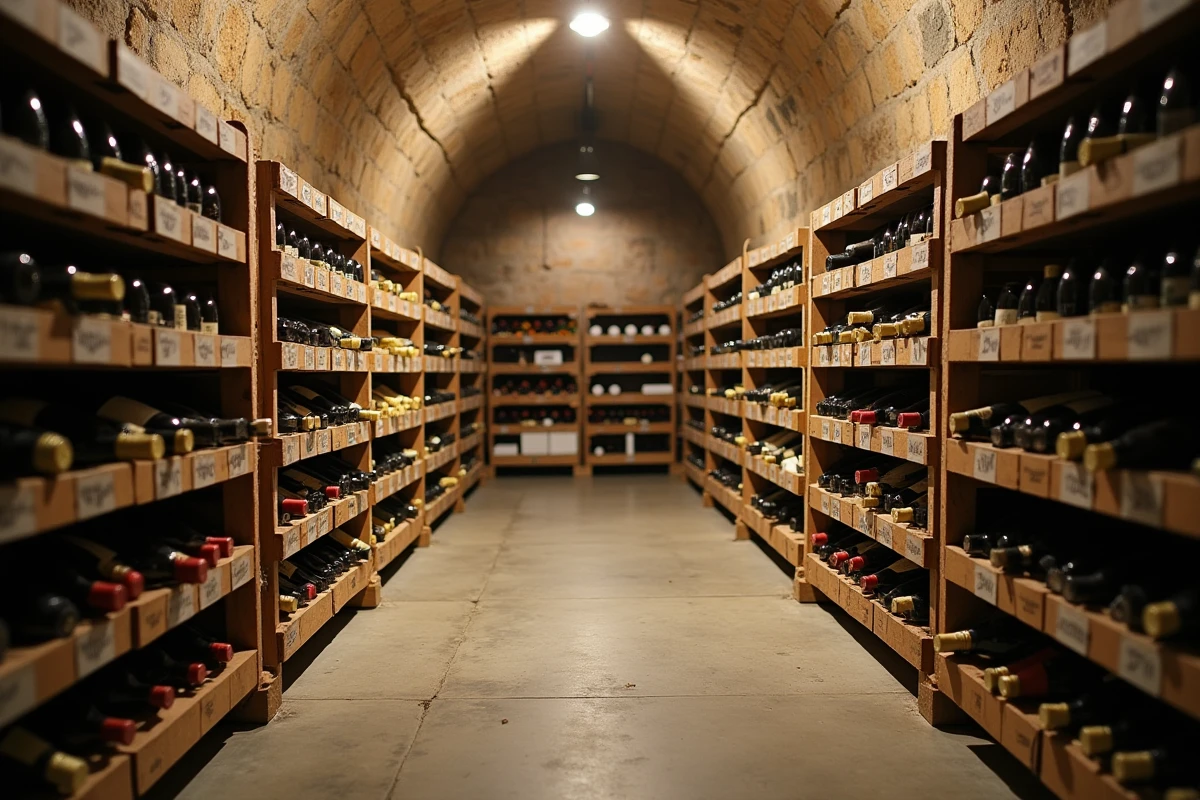
- Store the meal wine bottles in two separate lots, with one lot taken out in advance for service and a second in reserve, opened only if consumption exceeds expectations
Temperature and service logistics
Champagne served too warm is less enjoyable. Providing enough ice buckets or refrigerated fountains to keep the bubbles between 8 and 10 °C ensures a smooth service flow. A poorly chilled white wine or champagne increases the rate of abandoned glasses, which skews the perception of remaining quantities at the end of the evening.
For red wine, a slightly cool temperature (around 16 °C) works better in a heated reception room or in summer outdoors than serving at room temperature.
The calculation of drink quantities for a reception of 100 people is not approximate when reasoning by sequence. Champagne at the cocktail and dessert, still wine at the meal, adjustment according to actual drinkers: these three parameters are sufficient to place an order without unpleasant surprises.