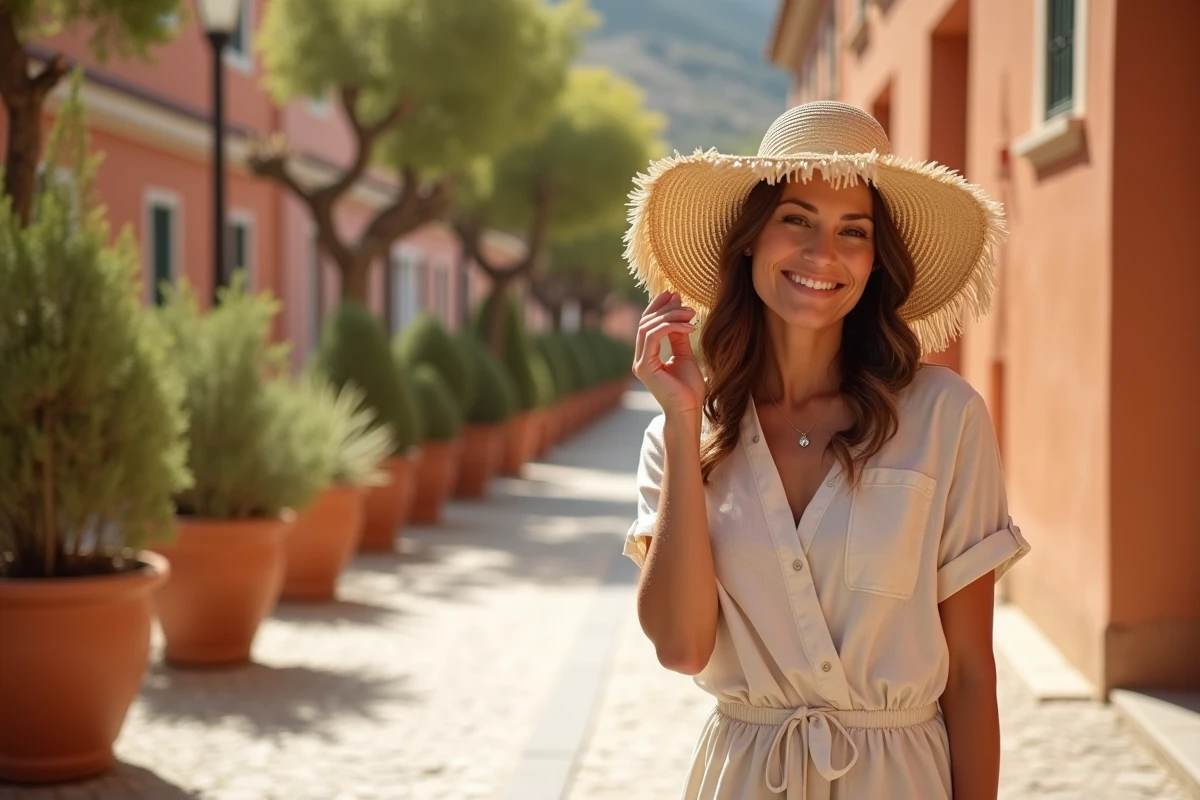
The fringed hat is not worn like a classic fedora or a Panama. The fringes add visual volume, movement, and a strong stylistic connotation, straddling western and bohemian styles. Before falling for a model, one must understand how the fringe interacts with the structure of the hat, the shape of the face, and the rest of the outfit.
Materials and Types of Fringes on a Summer Hat
Not all fringes are created equal. On a summer hat, we distinguish three categories that have neither the same appearance nor the same use.
The long textile fringes in a western style hang below the brim, sometimes down to the shoulders. They are made from suede, soft leather, or faux leather. This type is suitable for festival looks, worn with denim shorts and boots.
Short fringes made from raffia or frayed straw remain attached to the edge of the hat. Less spectacular, they provide a bohemian texture without overwhelming the silhouette. This is the most versatile format for beach or city use.
Finally, mixed decorative fringes (beads, shells, ribbons) fall under artisanal customization. Some designers start with a neutral hat and add a gradient of beads or custom textile elements, especially for weddings and summer events. This segment is rapidly growing on social media.
To choose a fringed hat that suits your style, the starting criterion remains the material of the fringe and its length, not the shape of the crown.
Face Shape and Brim Width with Fringes
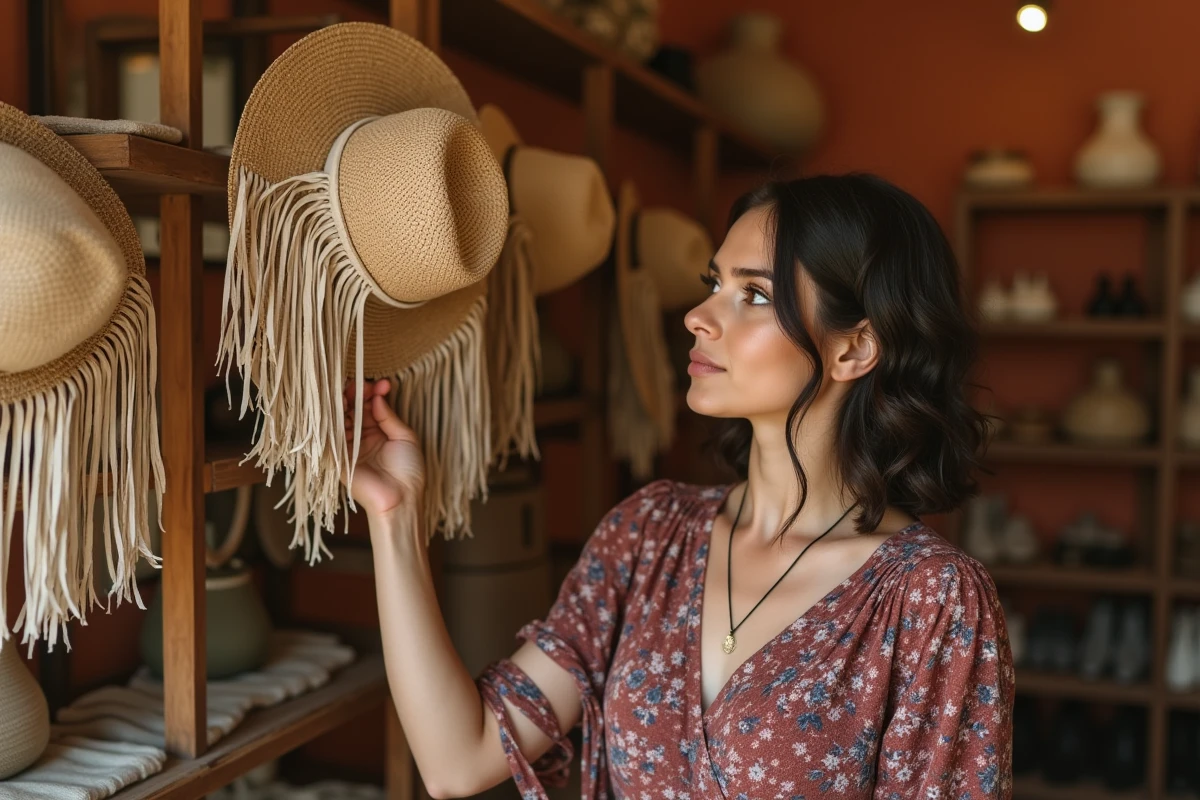
The fringes alter the perception of the hat’s width. A medium brim adorned with hanging fringes will appear wider than an identical brim without embellishment. This is a parameter that most general guides overlook, even though it radically changes the result on the face.
Round or Square Face
Opt for a structured brim with short fringes that do not extend below the jawline. Long, soft fringes accentuate roundness by adding lateral volume. A high-crowned hat with frayed raffia fringes elongates the silhouette without widening it.
Long or Oval Face
Long fringes work well because they create a horizontal line that breaks the verticality. A wide brim with suede textile fringes provides the desired balance. Ensure that the crown is not too high to avoid elongating further.
The basic rule: measuring your head circumference with a tape measure is the first step before any purchase. A fringed hat that is too tight will cause the embellishments to rise awkwardly, while a model that is too loose will tilt over the eyes and negate the effect of the fringes.
Fringes on Summer Hats: Style Mistakes to Avoid
The cowgirl core and bohemian trend driven by festivals encourages the accumulation of fringed pieces. However, stylists recommend reserving fringes for accessories rather than main clothing to avoid an overloaded effect, especially in the sun and while moving.
Specifically, if your hat has long fringes, avoid combining it with:
- A fringed bag made from the same leather or faux leather, which creates a total costume look
- A fringed jacket or vest, visually redundant and hard to read from a distance
- Large dangling jewelry that competes with the fringes of the hat near the face
One fringed element per outfit is enough to assert the style without falling into caricature. The hat is the most visible accessory; it should remain the focal point.
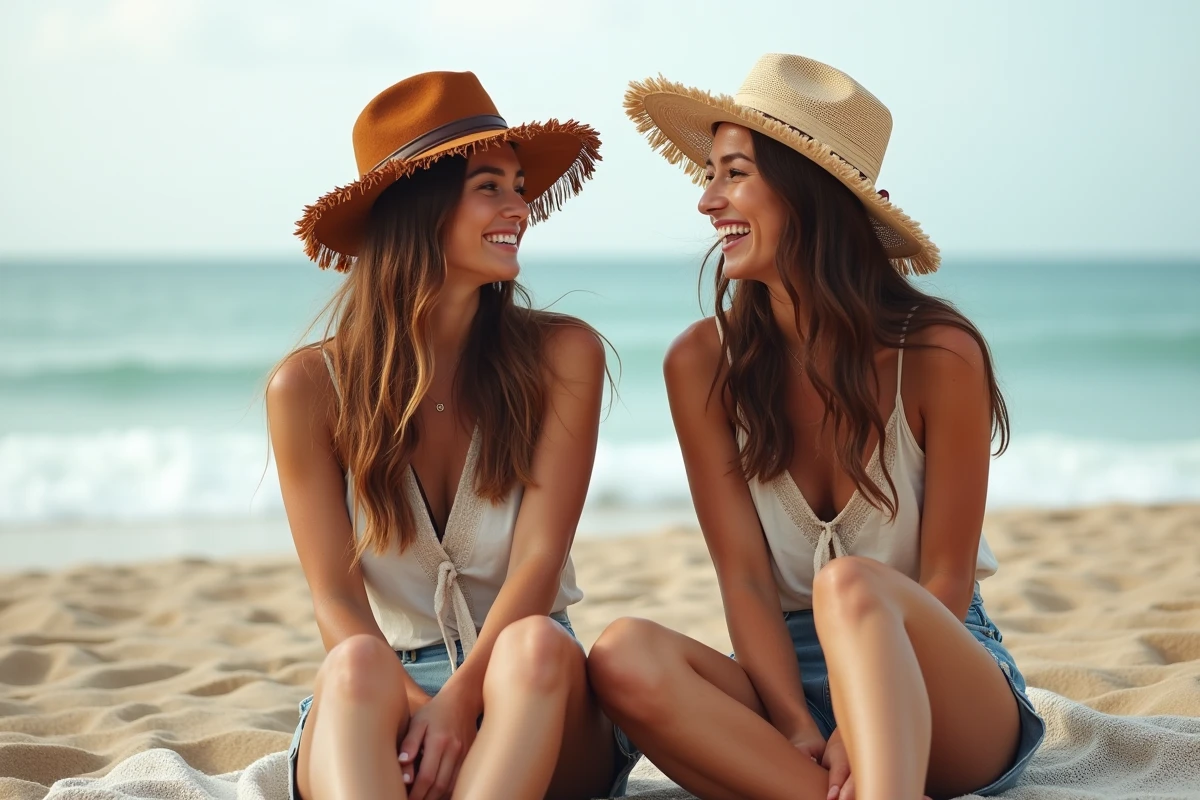
Fringed Straw or Felt Hat: What Summer Use
The choice of crown material determines sun protection and the durability of the hat as much as its aesthetics.
Natural straw (Panama, braided raffia) offers superior ventilation and lightweight, suitable for beach days or afternoons on the terrace. Raffia fringes integrate naturally with the hat’s material, providing a cohesive look.
Lightweight felt, even in summer weight, retains more heat. It is justified for outdoor evenings, evening festivals, or more structured looks. Suede or leather fringes pair better with felt than with straw, for texture consistency.
A common pitfall: buying a cheap straw hat with glued synthetic fringes. After a few sun exposures, the glue softens, and the fringes detach. We recommend checking that the fringes are sewn or braided directly into the brim, not just fixed with a dot of glue.
Colors and Combinations for a Summer Look with a Fringed Hat
The fringed hat is not a neutral accessory. Its presence requires calibrating the colors of the rest of the outfit.
- Natural tones (beige, ecru, camel) are the easiest to integrate and work with most summer outfits, from denim to white linen
- Black gives a more rock or assertive western look, suitable for festivals but less obvious by the sea
- Bright colors (terracotta, turquoise) add character but require keeping the rest of the outfit simple, ideally in solid tones
The fringed hat in natural tones works from everyday to festival without particular effort in matching. It is the safest choice for a first purchase.
Custom models with beads or embroidery, very present in recent collections, allow for a touch of color without the entire hat being colored. This approach is particularly suitable for events where the hat must adapt to a specific outfit.
The fringed hat remains a statement accessory, not a discreet basic. Choosing the right fringe length, the right material, and limiting fringes to just the hat in the outfit are the three decisions that separate a mastered look from a costume.