The fuel tank capacity of a motorcycle directly determines the distance that can be traveled between two fuel stops. On a mid-size trail bike, a 16-liter tank offers a decent range for mixed use, but drops below 250 km off-road. For long trips without a gas station, the tank size becomes a selection criterion as crucial as power or seat comfort.
Real range and motorcycle tank capacity: what the technical specifications don’t show
A tank advertised as 20 liters or more does not guarantee a proportional range. Fuel consumption varies depending on the type of terrain, engine speed, and load. Feedback from travelers shows that off-road, the range can drop significantly compared to manufacturer figures, even with a large tank.
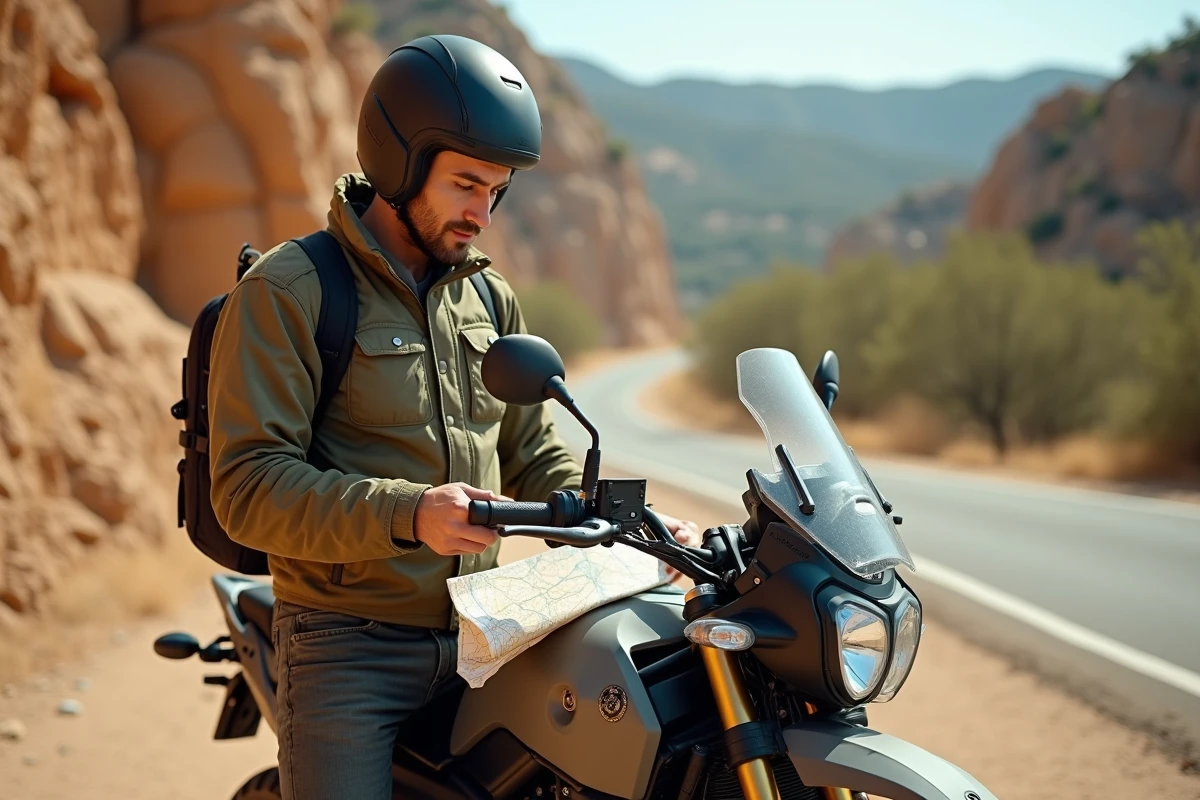
The Yamaha Ténéré 700 World Raid, with its 23 liters, claims a range of about 500 to 575 km per tank. This figure corresponds to primarily road use. On trails or in degraded conditions, fuel consumption increases and this range decreases significantly.
Before choosing a model based on its capacity, two data points must be considered: the gross tank capacity and the average consumption in the actual intended use conditions. To learn everything about motorcycle tank capacity, this distinction between theoretical range and real-world range remains the starting point.
Trails and touring bikes with large tanks: two different design philosophies
Motorcycles with large tanks are divided into two families with distinct philosophies. Understanding these allows you to avoid choosing the wrong category when making a selection.
Mid-size trails and adventure: the tank serving off-road needs
Travel trails prioritize a large tank integrated into a high geometry. The Ténéré 700 World Raid exemplifies this approach: 23 liters housed in a frame designed for long stages on unpaved roads. The trade-off is at the weight level, which increases with the fuel carried and affects low-speed handling.
On these models, the upright riding position and high seat height partially compensate for the extra weight. The rider maintains good control standing on the footpegs, a common posture off-road.
GT and touring bikes: comfort takes precedence over gross capacity
Grand Touring motorcycles (Honda Gold Wing, BMW R 1250 RT, Yamaha Tracer) feature generous tanks, but the priority is on duo comfort, aerodynamic protection, and storage space. High range is a secondary effect of an engine optimized for highway cruising speeds.
The choice between trail and GT depends on the intended terrain, not just the distance. A large tank trail excels on mixed routes with unpaved sections. A GT touring bike is better suited for major roads and two-up travel on the highway.
Technical criteria for evaluating a large tank motorcycle
Beyond capacity, several technical parameters influence the riding experience with a large tank. Three deserve particular attention.
- Weight distribution when full: a full tank alters the center of gravity. Well-designed models place the mass of fuel as low and as close to the center of the motorcycle as possible, which limits the effect on cornering stability and maneuverability at a standstill.
- Gauge position and usable reserve: some tanks display a high total capacity but retain an inaccessible reserve due to the shape of the tank or the location of the pump. The amount that is actually usable may be one to two liters less than the catalog figure.
- Compatibility with saddlebags and travel equipment: a wide or tall tank may hinder the attachment of magnetic or strap-mounted tank bags. On adventure trails, manufacturers generally provide suitable mounting points, but this is not always the case on large tank roadsters or customs.
Small displacement motorcycles with large tanks: a trend from emerging markets
The association of “large tank” and “large displacement” is no longer automatic. In markets like Madagascar or certain West African countries, motorcycles from 150 to 250 cm3 are now offered with tanks exceeding 10 liters. Models like the TVS or Bajaj Boxer 150 feature tanks of about 11 liters, designed to cover long distances on degraded roads without frequent access to a gas station.
This logic could influence the European market. With the rise of lightweight trails (around 400-450 cm3), the large capacity tank on small displacement bikes becomes a selling point for accessible travel, without the weight or cost of a large twin adventure bike.
For a motorcyclist considering their first long-distance trip, these lightweight machines with large tanks offer an interesting compromise: low consumption, high range, and manageable weight that facilitates handling on all types of surfaces.
Choosing a large tank motorcycle based on trip profile
The right choice depends on the coherence between the dominant type of route and the characteristics of the model. Three trip profiles clearly guide the decision.
- Mixed road and trail trips (raids, itinerant travel): an adventure trail with a tank larger than 20 liters and ergonomics designed for standing riding. The Yamaha Ténéré 700 World Raid fits this profile.
- Long highway trips or two-up travel on major roads: a GT touring bike with wind protection, comfortable seat, and smooth low-end engine. The tank capacity often exceeds 20 liters on these models, with moderate consumption thanks to aerodynamics.
- Daily use with weekend getaways: a mid-size trail or a roadster with a tank of 16 to 18 liters is sufficient. The range covers a week of commuting and a round trip of a few hundred kilometers without refueling.
The tank is not everything. The seat position, duo comfort, and engine reliability remain at least as critical criteria for regular long-distance use. A 23-liter tank on a motorcycle whose seat becomes uncomfortable after two hours solves nothing.